
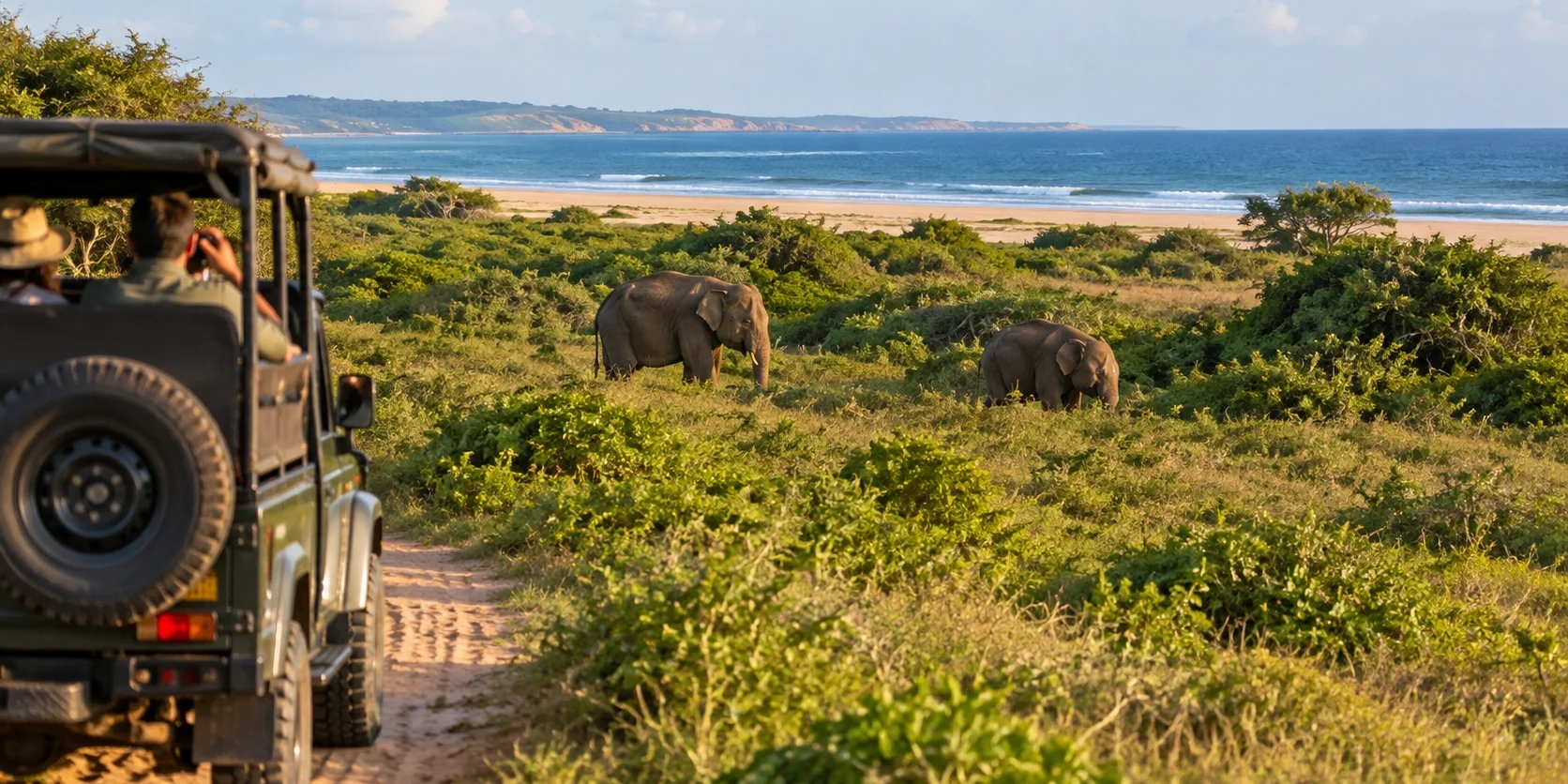
A Sri Lanka safari and beach holiday brings together two very different kinds of day. One asks you to get up early, watch carefully and accept that wildlife sets the pace. The other gives you permission to leave the schedule open.
The combination works best when the journey between them has been considered properly. Start by deciding what you want from the wildlife experience and how much beach time you want to protect. Then choose a route that serves both priorities.
Our Sri Lanka safari tours introduce the main park choices. This guide focuses on fitting that experience into the rest of your holiday, from the overnight arrangements to the first relaxed morning by the sea.
Give the safari a clear purpose
Ask everyone in your group what they are hoping for. One person may be excited by elephants, another may enjoy photographing birds, and someone else may simply want to experience a national park for the first time.
These answers are more useful than choosing the most recognisable park name. They also help set expectations. Wildlife cannot be booked like a hotel room, and seeing a particular animal should never be the only measure of a successful drive.
Think about the experience you will enjoy even without a headline sighting. Would you be happy watching smaller animals and listening to the guide? Do you want a patient photographic outing, or an introduction to wildlife that leaves time for other activities?
Choose a park that fits the wider journey
Yala, Udawalawe and Wilpattu offer different settings. Yala is associated with leopard habitat and varied wildlife. Udawalawe is especially known for elephants and more open views. Wilpattu has wooded landscapes and natural water basins known as villus.
Location matters alongside wildlife. Yala and Udawalawe can fit a journey through southern Sri Lanka, while Wilpattu can make more sense when your route includes the north-west or Anuradhapura. See our park comparison for the main differences.
Once you have a preferred park, ask what it adds to the journey. Does it sit between places you already want to visit, or create a substantial detour? A park that suits the route may give you more time to enjoy wildlife than a famous alternative reached through a rushed excursion.
Choose the coast around your travel month
Decide on the beach region before selecting a specific hotel. Sri Lanka’s different coasts do not share identical seasonal conditions, so the beach section should be considered alongside the dates of the trip.
The south and west are commonly favoured from December to March, while the east is often considered from around May to September. These are broad planning patterns rather than promises about individual days. Our Sri Lanka itinerary guide explains how the coast can change the shape of a route.
Next, describe what beach time means to you. You may want a hotel with a pool and nearby restaurants, somewhere quiet to read, or a base for short outings. Do not assume every attractive stretch of coastline offers the same experience. If swimming is a priority, ask about local conditions for the specific beach and time of year.
Count usable beach days rather than hotel nights
A three-night beach booking does not automatically give you three full days by the sea. The arrival and departure arrangements determine how much time you actually have.
Write those two days into the itinerary before judging the balance. If you arrive late after a transfer and leave early for the airport, the stay contains only two full days. That may be enough, but it should be a deliberate choice.
The same principle applies to the safari stop. A night near a park should help the wildlife experience work comfortably, rather than simply adding another hotel to the list.
For planning purposes, you could discuss a two-night wildlife stop followed by four beach nights. Treat that as an allocation to test against your flights and route, not a fixed recommendation for every trip. If the wider holiday is short, remove another stop before trying to squeeze everything in.
Make the day before the safari manageable
Start with the collection arrangements and work backwards. Ask when you need to be ready, whether breakfast will be available and how far the accommodation is from the meeting point.
Choose a manageable arrival day so you can settle in, prepare what you need and get some rest. Avoid booking a late activity simply because there is an empty space on the itinerary.
Keep the practical questions together: drinking water, refreshments, toilet arrangements, the expected drive length and what happens in poor conditions. Ask the operator which details will be confirmed closer to departure, including current park access and any operational changes.
This preparation is particularly useful for first-time safari visitors. Knowing what the day involves lets you focus on the experience once it begins.
Leave room between the jeep and the beach
It can be tempting to schedule a safari, a long transfer and a special dinner on the same day. Consider how that will feel after an early start.
Ask whether a later departure, another night near the park or a simpler first evening on the coast would work better. If you do travel onwards after the drive, keep the rest of the day light.
Make the first full beach day genuinely free. There is no need to replace the safari timetable with a sequence of excursions. You can decide later whether to explore the area, book an activity or spend the day at the hotel.
Adapt the combination for children
A family wildlife experience should reflect the children’s ages, interests and ability to sit comfortably in a vehicle. Talk through the early start, uneven tracks and expected time in the jeep before confirming arrangements.
Prepare children for uncertainty. Looking for tracks, noticing birds and watching how animals behave can keep the experience interesting without promising a particular sighting. Ask the driver questions and allow quieter moments for watching.
For the beach section, check the accommodation details that affect everyday comfort, including room configuration, meal availability and pool supervision requirements. Keep the next morning after a busy travel day unplanned where possible.
Our Sri Lanka family holidays can bring these decisions together within one route. Include the children’s usual routines in your enquiry so the itinerary reflects how your family actually travels.
Make a honeymoon feel spacious
For couples, the contrast between wildlife and the coast can be the main attraction. You do not need to add a second safari simply because the route makes it possible.
Discuss whether you would prefer more time in one wildlife area or a longer stay at the beach hotel. If one of you is more interested in safari than the other, a single well-planned experience may provide a better balance than several early starts.
Keep special hotel experiences away from your busiest travel days. A private dinner or spa appointment is easier to enjoy when you are already settled, rather than estimating when a transfer will finish.
Explore our Sri Lanka honeymoon holidays if you would like help balancing activities with time together. Tell us which parts of the holiday deserve the most space in your budget and schedule.
Check the complete proposal before booking
Read the safari and beach arrangements as one journey. Confirm the hotel nights, transfers, jeep arrangements, entry fees and meal basis, along with any optional activities.
Then check the final airport journey. A relaxing beach stay should end with a practical departure plan that reflects your flight time, the hotel location and the transfer advice provided for your route.
Send us your dates, available nights, group size and wildlife interests. We can help you explore a private Sri Lanka tour that gives the safari enough attention and leaves proper time for the coast.